Living in Germany
Banking & Finance
How to Open a Bank Account in Germany for International Students


How to Open a Bank Account in Germany for International Students
If you are moving to Germany for your studies, opening a bank account is one of the first and most important steps to take after arriving. Managing rent, groceries, transportation, and other daily expenses becomes much easier once you have a local account set up. For most international students, two types of accounts are relevant: a blocked account (Sperrkonto) and a current account (Girokonto).
The blocked account is typically required as part of the student visa application process, serving as proof that you have sufficient financial resources for your first year in Germany. Once you arrive, the focus shifts to opening a current account for everyday use.
In this article we only focus on the Current Account.
What Is a Current Account (Girokonto)?
A current account, known in German as a Girokonto, is a standard everyday bank account used for managing daily finances. This is the account you will use to pay rent, receive transfers from your blocked account, buy groceries, set up direct debits, and handle all routine transactions during your time in Germany. Without one, managing your finances as a student is significantly more difficult.
N26 — Fast, Digital, and Student-Friendly
N26 is a fully digital bank that operates entirely through a mobile app, making it a popular choice among international students who prefer a modern, paperless banking experience. Key benefits include a quick online setup using just your passport and smartphone, a free standard account, a Mastercard debit card, real-time transaction notifications, and support in multiple languages including English — a major advantage for students still learning German.
Account setup can often be completed within minutes, meaning you can be fully operational before you have even finished unpacking. However, there are a few things to keep in mind. N26 has no physical branches, and customer support is handled entirely online. Some users have reported slow response times or no response at all when dealing with complex issues.
N26 is an excellent choice if you value speed, simplicity, and a fully mobile experience.
Sparkasse — Reliable, Traditional, and Widely Trusted
Sparkasse is one of Germany’s most established and widely used banking networks, with branches located across the country. Many Sparkasse locations offer dedicated student accounts (Studentenkonto), often free of charge or with very low fees. Local branches operate under regional names such as Berliner Sparkasse, Hamburger Sparkasse, or Frankfurter Sparkasse.
The key advantages of Sparkasse include access to physical branches, a large ATM network for free cash withdrawals, and in-person customer support. Sparkasse accounts are also widely recognized and trusted by landlords, employers, and institutions across Germany — which can matter when signing rental contracts or setting up direct debits.
The trade-off is that account setup typically requires an in-person branch visit and more paperwork, and the app and online banking experience is less polished than digital-first banks like N26.
Other Banks Worth Considering
Beyond N26 and Sparkasse, several other banks are worth researching depending on your individual needs. DKB, Commerzbank, Deutsche Bank, and ING are all reputable options with competitive student offerings. It is worth spending a little time comparing fees, features, and language support before making your final decision.
What Documents Do You Need?
To open a current account in Germany, you will typically need the following:
- A valid passport
- Proof of address in Germany
- City Registration (“Anmeldung”)
- Your university admission letter or student enrolment certificate
- A residence permit, depending on your nationality and visa status
- A German phone number
Gathering all of these documents before starting your application — whether online or in person — will help avoid unnecessary delays.
Which Bank Is Right for You?
The best choice depends on your personal preferences. If you want a fast, app-based solution with an English-friendly interface and minimal paperwork, N26 is a strong option. If you prefer face-to-face support, physical branches, and a widely recognized name, Sparkasse is the more traditional and reliable choice. Both are popular among international students, and if your needs change over time, switching banks is always an option.
Disclaimer: This article is for informational purposes only. It does not recommend any specific bank. Please consider seeking professional advice before making any financial decisions.
Credit Cards
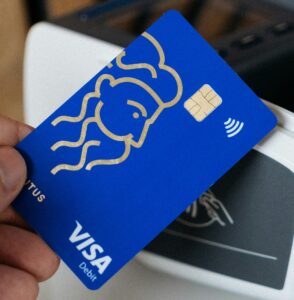

Credit Cards in Germany — A Guide for International Students
For international students in Germany, understanding how credit and debit cards work is an important part of managing your finances confidently. The payment culture in Germany differs from many other countries, and knowing what to expect will help you avoid surprises and stay in control of your money from day one.
Is Germany Still a Cash Country?
Despite the growing popularity of card payments across Europe, Germany remains one of the more cash-oriented countries on the continent. Many smaller shops, independent restaurants, local markets, and businesses in smaller towns still prefer or exclusively accept cash. As an international student, it is always wise to carry a certain amount of cash with you — particularly when venturing outside major city centers.
Debit Cards vs. Credit Cards — What Is the Difference?
When you open a current account (Girokonto) in Germany, you will typically receive a debit card rather than a credit card. Understanding the difference between the two is important.
A debit card — such as a Girocard or Debit Mastercard — deducts money directly from your bank account at the time of purchase. There is no borrowing involved, making it a straightforward and transparent way to manage your spending. For most international students, a debit card will cover the vast majority of daily needs without any issues.
A credit card, by contrast, allows you to make purchases and repay the amount at a later date. Because of this, most German banks require proof of income or an established credit history before issuing one. As a new international student without a financial track record in Germany, obtaining a credit card can be more difficult — at least in the early months of your stay.
Cards Issued by N26 and Sparkasse
N26 issues a Mastercard debit card with all standard accounts. It works seamlessly for online shopping, international payments, and everyday purchases, with all transactions charged directly to your account. This makes it a simple and reliable option, especially while you are still getting used to budgeting in a new country.
Sparkasse offers both debit cards and traditional credit cards, including Visa and Mastercard options. Credit card approval through Sparkasse may depend on your financial situation, and some cards carry annual fees. If you are interested in applying for a credit card through Sparkasse, speaking directly with a branch advisor is the best way to understand your options and eligibility.
Other Banks Worth Considering
Beyond N26 and Sparkasse, Germany offers a wide range of banking options for international students. Deutsche Bank and Commerzbank provide comprehensive services with extensive branch networks. GLS Bank is a popular choice for those interested in ethical and sustainable banking. Volks- und Raiffeisenbanken, a network of cooperative banks, are also widely available and known for their community-focused approach. It is always worth comparing fees, features, and account requirements before committing to a bank.
Which Cards Are Accepted in Germany?
Knowing which card networks are widely accepted in Germany will help you choose the right payment method:
- Visa and Mastercard are by far the most universally accepted cards across Germany, whether for in-store purchases, online shopping, or travel bookings
- American Express (Amex) is broadly accepted but not universal — its higher transaction fees mean some merchants choose not to accept it. Always carry a Visa or Mastercard as a backup
- JCB and UnionPay are increasingly accepted in larger cities and tourist areas, but coverage is not yet universal. Students relying on these cards should check acceptance in advance or carry an alternative
Practical Tips for Managing Payments in Germany
A few simple habits will help you navigate payments smoothly throughout your studies:
- Always carry some cash, especially when visiting smaller towns, local markets, or independent restaurants
- Use your debit card for everyday purchases to keep spending transparent and manageable
- Be aware of potential foreign transaction fees if using a card issued outside Germany
- Consider applying for a credit card later in your studies, once you have built a financial history in Germany — it can be useful for booking flights, hotels, and rental cars
Key Takeaways
Debit cards and cash are the standard payment methods for international students in Germany, and a good debit card combined with some cash on hand will cover virtually everything you need. Credit cards are a useful addition over time but are not essential from day one.
Disclaimer: This article is for informational purposes only. It does not recommend any specific bank. Please consider seeking professional advice before making any financial decisions.
Trading Accounts

Trading Accounts in Germany — A Guide for International Students
Investing as an international student in Germany may sound intimidating at first, but it is more accessible than many people expect. With the right platform and a basic understanding of how the system works, even small and regular contributions can help you build strong financial habits early in life. This guide covers everything you need to know about opening a trading account in Germany as an international student.
Can International Students Open a Trading Account in Germany?
Yes — as long as you are over 18 years old and legally registered in Germany, opening a brokerage account is generally a straightforward process. Most providers require the following documents:
- A valid passport
- A registered German address
- Your German tax ID (Steuer-ID)
- A SEPA bank account for verification
Once you have these in place, you can typically complete the application process online within a matter of days.
Why Consider Investing as a Student?
Many students assume that investing is only for people with large amounts of money or financial expertise. In reality, many platforms in Germany are specifically designed with beginners in mind, offering low fees, intuitive mobile apps, and automated investment options that require very little hands-on management. Starting early — even with small monthly amounts — allows you to benefit from compound growth over time and develop healthy financial habits that will serve you well beyond your student years.
Please note that investing always involves risk.
Scalable Capital — Best for Beginners and Regular Savers
Scalable Capital is one of the most popular investment platforms among students and young investors in Germany — but often under the radar of international students. The platform allows you to trade stocks, ETFs, funds, bonds, derivatives, and crypto ETPs through a clean and intuitive app and web interface that is easy to navigate even for complete beginners.
One of its standout features is the ability to set up automated ETF savings plans starting from small monthly amounts — making it ideal for students who want to invest consistently without a large upfront commitment. Scalable Capital offers a free basic plan as well as a premium subscription that provides unlimited commission-free trades for a flat monthly fee, which is a cost-effective option if you plan to trade regularly.
One important consideration: if you leave Germany permanently, your Scalable Capital account may be closed, as the service is primarily designed for German residents.
N26 — Simple In-App Investing for Everyday Bankers
For students who already use N26 as their primary bank, the platform also offers a straightforward way to start investing directly within the mobile app. You can buy and sell a selection of stocks and ETFs without needing to open a separate brokerage account — keeping your banking and investing conveniently in one place.
While the range of available assets is more limited compared to dedicated brokers like Scalable Capital, N26 investing is a low-effort entry point that works well for beginners who want to dip their toes into investing without added complexity.
Sparkasse — Traditional, Reliable, and Widely Trusted
For students who prefer a more traditional approach to investing, Sparkasse offers investment services through a securities account known as a Wertpapierdepot, often combined with the S Broker platform. This gives you access to both German and international stock exchanges and a broad range of financial products.
Compared to digital-first platforms, Sparkasse may involve more administrative steps and higher fees. However, the reassurance of in-person support at a local branch can be genuinely valuable — particularly for students who prefer a more guided and personal investment experience.
Save Taxes on Investment Income — Apply for a Freistellungsauftrag
An important aspect of investing in Germany that every student should be aware of is the tax treatment of investment gains. In Germany, investment income is subject to a withholding tax of 25%, plus a solidarity surcharge.
However, you are entitled to a tax-free allowance of up to €1,000 per year — known as the Sparerpauschbetrag. To take advantage of this allowance, you need to submit a simple form called a Freistellungsauftrag to your broker. This can be done when you open your account and can save you a meaningful amount of money each year, so it is strongly recommended that you set it up from the start.
Key Takeaways
Whether you choose Scalable Capital for its low-cost savings plans, N26 for its all-in-one banking and investing convenience, or Sparkasse for its traditional reliability and in-person support, there is an option to suit every type of investor. Start small, invest regularly, and remember to submit your Freistellungsauftrag to make the most of your annual tax-free allowance.
Disclaimer: This article is for informational purposes only. It is not investment or tax advice, and does not recommend any specific bank or broker. Investing involves significant risk — please do your own research and consider seeking professional advice before making any financial decisions.
Healthcare & Safetey
Seeing a doctor


How to See a Doctor in Germany as an International Student
In Germany, most international students use public health insurance, which is mandatory when you enroll at a German university. Understanding how the healthcare system works can save you time, stress, and money — especially when you’re new to the country and unfamiliar with local procedures.
The German healthcare system follows a structured, step-by-step process. Unlike many other countries where patients head straight to a hospital, Germany’s system is built around a primary care model. Patients typically visit a general doctor first before being referred to a specialist or hospital.
1. Visiting a Hausarzt in Germany (Family Doctor)
The Hausarzt, or Family Doctor, is your first point of contact for most health problems. Whether you have a fever, persistent cough, back pain, or any other non-emergency concern, your first step is to make an appointment with a local general practitioner.
A typical Hausarzt practice is a small clinic with one doctor, a few receptionists, and medical assistants. To book an appointment, you can call the clinic directly or, in many cases, use an online booking platform. When you arrive, simply show your health insurance card (Krankenversicherungskarte), and the doctor will assess your symptoms, perform a physical examination if necessary, and recommend a course of treatment. The consultation is fully covered by public health insurance, so there are no out-of-pocket costs for standard visits.
For oral health concerns, the process is slightly different — you can visit a dentist directly without a referral from your Family Doctor.
2. Getting a Specialist Appointment in Germany
If your condition requires more specialized medical attention, your Family Doctor will issue a referral known as an “Überweisung”. This document allows you to see a specialist doctor relevant to your condition — for example, a dermatologist for skin issues, a cardiologist for heart concerns, or an orthopedist for joint and bone problems.
Specialist appointments in Germany can sometimes have longer waiting times, especially in larger cities, so it’s advisable to book as early as possible after receiving your referral. The specialist will conduct more detailed examinations, order tests, or recommend targeted treatments. Most specialist visits are also covered by public health insurance when accompanied by a valid Überweisung.
3. Hospital Treatment in Germany for Students
Hospitals in Germany are primarily reserved for serious illnesses, complex surgeries, and cases that cannot be handled in an outpatient setting. As an international student, it’s important to know that you generally will not — and should not — go to a hospital for routine health issues. Most hospital admissions require a prior referral from a doctor. Public health insurance typically covers the majority of hospital costs, though there may be a small daily co-payment for inpatient stays.
4. Emergency Healthcare in Germany
In the event of a serious, life-threatening emergency, you do not need a referral. You can go directly to the nearest hospital emergency department, which is open 24 hours a day, 7 days a week. Alternatively, you can call 112, Germany’s national emergency number, to request an ambulance. Emergency services are available to everyone, regardless of insurance status.
Summary: How the German Healthcare System Works
For international students, remembering this simple flow will help you get the right care at the right time:
Hausarzt (first consultation) → Specialist if needed → Hospital for serious treatment or emergency
Germany’s public healthcare system is reliable, well-organized, and largely free at the point of use for insured students. Getting to know a local Hausarzt (safe the number and address on your phone) shortly after arriving in Germany is strongly recommended — so that when you do need medical care, you’re already set up and ready to go.
Health Insurance


Health Insurance in Germany for International Students
Navigating health insurance as an international student in Germany can feel overwhelming at first — but the system is actually well-structured and highly accessible. Understanding your options early on will help you stay covered, avoid administrative headaches, and focus on your studies.
What Is Public Health Insurance in Germany?
Public health insurance (gesetzliche Krankenversicherung) is the most common and recommended option for international students in Germany. It is available to students under 30 years old who are enrolled in a recognized degree program at a German university. If you are 30 or older, or enrolled in a language course rather than a degree program, you may need to look into private health insurance as an alternative.
Public health insurance in Germany is not just a bureaucratic requirement — it provides comprehensive, high-quality medical coverage that ensures you can access healthcare without worrying about large out-of-pocket expenses.
What Does Public Health Insurance Cover?
One of the biggest advantages of public health insurance is the broad range of services it includes. As an internationally insured student, you are covered for:
- Doctor visits, including consultations with your Family Doctor (Hausarzt)
- Hospital treatment, for serious illnesses or surgeries
- Prescription medicines, with only a small co-payment per item
- Partly Preventive checkups, helping you stay on top of your long-term health
- Basic dental care, including examinations and standard treatments
- Emergency services, including ambulance and emergency department care
This means that for the vast majority of everyday medical needs, you will face little to no direct costs — making public health insurance an excellent safety net throughout your time in Germany.
How Much Does Public Health Insurance Cost?
For students enrolled at a German university, the monthly contribution for public health insurance is set at a reduced student rate. Currently, this amounts to approximately €130 per month, which is significantly lower than the standard rate paid by employed workers. This subsidized rate applies until you turn 30 or until you exceed the standard duration of your degree program. Given the extensive coverage you receive in return, it represents strong value for money compared to private alternatives.
Popular Public Insurance Providers in Germany
Several public insurance providers operate across Germany, and as a student you are generally free to choose between them. The most well-known options include:
- Techniker Krankenkasse (TK) — widely regarded as the top choice for international students, TK offers English-language customer support, a user-friendly app, and a straightforward online registration process
- AOK — one of Germany’s largest providers, with regional branches across the country
- Barmer — known for its digital services and broad coverage network
- DAK-Gesundheit — another reliable national provider with competitive student services
Many international students choose Techniker Krankenkasse specifically because of its multilingual support and easy registration process, which can be completed entirely online — a significant advantage when you’re still settling into a new country.
How to Use Your Health Insurance
Once you have enrolled with a public insurance provider, you will receive your health insurance card (Krankenversicherungskarte). This card is essential — you will need to present it every time you visit a doctor, dentist, or hospital. The medical provider will then bill your insurance company directly, meaning you typically do not need to handle any payments yourself for covered services.
Registering for public health insurance should be one of your very first steps upon arriving in Germany — ideally before or immediately after enrolling at your university. Delaying registration can cause complications with your university enrollment and leave you without coverage during your first weeks in the country.
Staying insured means staying protected. With the right public health insurance in place, you can focus on what matters most: making the most of your student life in Germany.
Safety


Safety in Germany for International Students
Germany is widely regarded as one of the safest countries in Europe, making it a highly attractive destination for international students. Whether you are moving from Southeast Asia, Africa, the Americas, or elsewhere, you can generally expect a stable, secure, and well-organized living environment during your studies.
Is Germany Safe for International Students?
The short answer is yes — Germany consistently ranks among the safest countries in the world. Crime rates are relatively low compared to many other popular study destinations, and most incidents that do occur involve minor offenses such as pickpocketing, bicycle theft, or petty fraud rather than serious or violent crime. While crime levels have shifted slightly over the past decade, Germany remains a country where students can live, study, and travel with a high degree of confidence.
Universities and student residential areas are typically well-maintained, monitored, and supported by efficient local public services. Campus environments in particular tend to be safe spaces where students from all backgrounds feel welcome and protected.
Police and Public Security
One factor that contributes significantly to the feeling of safety in Germany is the visible and reliable presence of law enforcement. Police officers are regularly present in busy public areas, major train stations, shopping districts, and at large public events. This visibility acts as both a deterrent to criminal activity and a reassurance to residents and visitors alike.
Be cautious of individuals posing as police officers. Genuine police in Germany will always clearly identify themselves by showing an official police ID card (“Dienstausweis”) and providing their badge or identification number if requested. They will also speak fluent German at a native level. Be wary if someone claiming to be a police officer speaks little or no German, or has a noticeably strong foreign accent, and cannot properly verify their identity.
Beyond law enforcement, Germany’s broader public infrastructure — including well-lit streets, reliable public transport, and responsive emergency services — creates an environment where safety is built into everyday life.
University Support Systems
German universities take student safety seriously and offer a range of support structures to help international students feel secure and well-supported. Most institutions have dedicated international offices that assist with practical matters such as registration, housing, and navigating local services. Additionally, student counseling services are available for those experiencing stress, anxiety, or personal difficulties.
Universities also provide clear information about emergency contacts and campus security procedures, so it is worth familiarizing yourself with these resources shortly after arriving.
Practical Safety Tips for Daily Life
While Germany is safe, it is always wise to take basic precautions — just as you would in any country. Here are some simple steps to help you stay safe:
- Secure your belongings in crowded places such as train stations, markets, festivals, and tourist attractions, where pickpocketing is most likely to occur
- Lock doors and windows of your Apartment at nighttime or when you are away for an extended period
- Lock your bicycle with a sturdy lock, as bicycle theft is one of the most common minor crimes in German cities
- Be aware of your surroundings at night, particularly in unfamiliar neighborhoods or after large public events
- Stay informed about local weather risks — occasional flooding can occur in river regions, particularly along the Rhine and other major waterways. Follow local news.
Emergency Numbers to Know
Every international student in Germany should memorize or save the following emergency numbers before they need them (safe them to your phone):
- 112 — Medical emergencies and fire services (also works across the entire European Union)
- 110 — Police
Both numbers are free to call from any phone, including mobile phones without a SIM card or credit. In a genuine emergency, do not hesitate to call.
Final Thoughts
Germany offers international students a safe, stable, and welcoming environment to live and study. By staying informed, taking sensible precautions, and knowing who to contact in an emergency, you can enjoy your time in Germany with confidence and peace of mind.
Leisure
Online Shopping


Online Shopping in Germany for International Students
As an international student in Germany, setting up your new life means sourcing everything from food over clothing to electronic appliances. Fortunately, Germany has a well-developed online shopping ecosystem that makes it easy to find almost anything you need — often delivered directly to your door within one or two days.
Amazon — The Most Popular Choice
When it comes to online shopping in Germany, Amazon is by far the most widely used platform among international students, and for good reason. It offers an enormous range of products across virtually every category, from electronics and study materials to groceries and household items.
One of Amazon’s biggest advantages for international students is its reliable and fast delivery, with many items eligible for next-day or same-day shipping. Amazon also handles all import customs formalities on eligible orders, which removes a significant administrative burden — particularly for students who are not yet familiar with German import regulations. Payment options are flexible, accepting credit cards, PayPal, and bank transfers, making it accessible for students from all backgrounds.
eBay — Great for Second-Hand Bargains
eBay.de is another extremely popular platform, especially among students looking to save money. What makes eBay particularly valuable is its strong second-hand marketplace, where you can find used furniture, bicycles, electronics, and clothing at a fraction of the original price.
For international students furnishing a new apartment on a tight budget, eBay can be a game-changer. Local pickup options also mean you can avoid delivery costs entirely for larger items like desks, shelves, or washing machines. The platform also features many private sellers, which often results in better prices than buying new.
Zalando — The Go-To Platform for Fashion
For clothing and fashion, Zalando is one of the most popular online stores in Germany. It stocks a wide range of international and European brands across all price points, and its free returns policy makes it easy to order multiple sizes and send back what doesn’t fit — a feature students particularly appreciate.
Taobao and Alibaba — Growing in Popularity
Taobao and Alibaba are rapidly gaining popularity among international students in Germany, particularly those from China who are already familiar with these platforms. They offer an enormous selection of products at very competitive prices. However, it is worth being aware that delivery times can be significantly longer, and import duties may apply depending on the value of the order.
Otto — Worth Knowing
Otto is a well-established German online retailer offering a broad selection of clothing, electronics, and home goods. While it is less popular among students than Amazon or eBay, it is a reliable alternative — particularly for larger household purchases.
Food Delivery Services in Germany
Beyond physical goods, food delivery services have become an essential part of student life in Germany — especially during exam season or on busy weekdays when cooking feels like one task too many.
Lieferando is by far the most dominant food delivery platform in Germany. It connects users with hundreds of local restaurants, fast food chains, and independent eateries, offering delivery across virtually every German city. Most students use Lieferando as their go-to app for ordering everything from pizza and sushi to kebabs and Thai food. Payment can be made by card, PayPal, or cash on delivery in some cases.
Wolt is a strong competitor that has been growing rapidly in German cities. It is known for its clean app interface, reliable delivery times, and a curated selection of higher-quality restaurant partners.
Uber Eats is also available in many larger German cities and offers a familiar interface for students who have used it in other countries.
For students looking to save money, many platforms offer student discounts, loyalty rewards, and regular promo codes — so it is worth checking deal platforms or subscribing to newsletters before placing your first order.
HelloFresh — Cooking Made Easy
For international students who enjoy cooking at home but struggle to plan meals or find the right ingredients, HelloFresh is an excellent option worth considering. HelloFresh is a meal kit delivery service that sends pre-portioned, fresh ingredients along with easy-to-follow recipe cards directly to your door on a weekly basis.
This is particularly useful for students who are new to German supermarkets and unfamiliar with local ingredients or product labels. Rather than spending time navigating a store and guessing quantities, HelloFresh takes the planning out of cooking entirely. Meals typically take between 20 and 40 minutes to prepare, making it a practical choice even on busy university days.
HelloFresh offers flexible subscription plans, allowing you to choose the number of meals per week and the portion size — ideal for students living alone or sharing an apartment with flatmates. You can pause or cancel your subscription at any time, which suits the unpredictable schedule of student life.
HelloFresh frequently offers heavily discounted first boxes for new customers, making it an affordable way to try the service before committing to a full subscription.
Climate

Climate in Germany — A Guide for International Students
Germany has a temperate climate with four distinct seasons, making it a country of noticeable weather changes throughout the year. For international students arriving from warmer or more tropical regions, understanding Germany’s climate is essential — it directly affects your daily life, wardrobe choices, travel plans, and overall wellbeing during your studies.
Regional Climate Differences
One of the most important things to understand is that Germany’s climate is not uniform. Weather conditions can vary significantly depending on which part of the country you are living in.
Northern Germany — Mild and Rainy
In northern Germany, including cities such as Hamburg, the weather is strongly shaped by proximity to the North Sea and the Baltic Sea. This oceanic influence results in mild winters and cool summers, but also frequent cloud cover, wind, and rain throughout the year. If you are studying in northern Germany, waterproof clothing and a good umbrella are essential items to have in your wardrobe at all times — regardless of the season.
Western Germany — Moderate and Comfortable
Western Germany, home to cities like Frankfurt, Dortmund, Göttingen, and Bochum, enjoys a relatively mild and moderate climate. Winters are cool but rarely extreme, while summers are warm and generally comfortable. Rainfall occurs regularly, particularly near the Rhine River region. For most international students, the western German climate is one of the easiest to adapt to, offering neither harsh winters nor excessively hot summers.
Eastern Germany — Continental and Variable
Eastern Germany, where cities such as Berlin and Leipzig are located, experiences a more continental climate. This means more pronounced temperature differences between seasons — winters can be noticeably colder, while summers tend to be warmer and drier than in the west. Students living in Berlin or Leipzig should invest in a good winter coat and be prepared for occasional summer heatwaves, which have become more frequent in recent years.
Southern Germany — Cold Winters and Warm Summers
Southern Germany, including Munich and the regions surrounding the Alps, has the most dramatic seasonal variation of all. Winters are cold, and snowfall is common — particularly in elevated areas. This makes southern Germany a popular destination for winter sports enthusiasts. Summers, on the other hand, are warm and enjoyable, though afternoon thunderstorms can occur frequently between June and August. Students in this region should pack accordingly for both extremes.
The Four Seasons in Germany
Beyond regional differences, Germany’s four seasons each bring their own distinct character:
- Spring (April – May) — Temperatures gradually rise, trees and flowers begin to bloom, and the days grow longer. Expect mild temperatures and occasional rain showers. A light jacket is usually sufficient.
- Summer (June – August) — The most pleasant time of year for outdoor activities, travel, and exploring Germany’s many festivals and markets. Temperatures typically range from 20°C to 30°C, though heatwaves are increasingly common.
- Autumn (September – October) — A beautiful season marked by colorful foliage and crisp air. Temperatures drop gradually, and rainfall increases. Layered clothing works best during this transitional period.
- Winter (November – March) — The coldest and darkest part of the year. November in particular can feel grey and dreary. Snow is possible across most regions, and temperatures can drop well below freezing, especially in the south and east.
How to Prepare for Germany’s Climate
For international students, the key to staying comfortable in Germany is layering. Investing in a warm winter coat, waterproof jacket, sturdy boots, and thermal underlayers will serve you well across all regions. Checking local weather forecasts regularly and adapting your wardrobe to the season will make your daily life significantly more comfortable — and help you enjoy everything Germany’s varied climate has to offer.
Self Driving & Public Transportation
Self Driving


Driving in Germany — A Guide for International Students
For international students considering getting behind the wheel in Germany, there is both good news and important information to be aware of. Germany has a well-developed road network, famously including the Autobahn, and driving can be a convenient way to explore the country beyond what public transport covers.
Using Your Home Country Driver’s License
One of the first questions international students ask is whether their existing driver’s license is valid in Germany. The answer depends on where you are from. In general, you can use your home country driver’s license for up to three months after arriving in Germany. This applies to most nationalities, including those from non-EU countries.
After the three-month period, the rules vary depending on your country of origin. Students from EU and EEA countries can continue using their existing license without any additional steps. Students from non-EU countries may need to either exchange their license for a German one or complete additional driving tests.
Traffic Laws and Road Rules in Germany
Germany is known for its strict and well-enforced traffic laws. Knowing the key rules before you drive will help you stay safe and avoid fines.
- Speed limits — In cities and residential areas, the standard speed limit is 50 km/h. On rural roads it is typically 90 km/h. The famous Autobahn has sections with no fixed speed limit, though a recommended speed of 130 km/h applies. Speeding fines in Germany can be significant, so always pay attention to posted signs.
- Seat belts — Wearing a seat belt is mandatory for all passengers in the vehicle at all times.
- Mobile phones — Using a handheld phone while driving is strictly prohibited and carries heavy fines. Hands-free devices are permitted.
- Alcohol limit — The legal blood alcohol limit for drivers is 0.5‰, and for new drivers under 21 it is 0.0‰. As a gentle advice: Don´t drink when drive. Always stay 0.0%.
- Road conditions — German roads are generally very well maintained, making driving a comfortable experience once you are familiar with local regulations.
The Cost of Owning a Car in Germany
While driving offers flexibility, owning a car in Germany comes with considerable ongoing expenses that students should carefully consider. These include car insurance, fuel costs, tax, and mandatory vehicle safety inspections carried out by organizations such as TÜV (Technischer Überwachungsverein). These costs can add up quickly and may not be practical on a student budget.
Affordable Alternatives to Driving
For most international students, public transport is a far more cost-effective and practical option. Germany has an excellent public transport network operated by Deutsche Bahn and regional providers, connecting cities, towns, and university campuses efficiently. The Deutschlandticket, available for a flat monthly fee, allows unlimited travel on regional trains and local public transport across the entire country — representing outstanding value for students.
Additionally, most student apartments offered through our accommodation service are located in close proximity to university campuses, meaning you can easily reach your university on foot, by bicycle, or using local public transport without ever needing a car.
Should You Drive in Germany as a Student?
Driving in Germany is certainly an option worth considering for weekend trips or exploring rural areas, but for day-to-day student life it is rarely a necessity. Between the Deutschlandticket, well-connected urban transport, and conveniently located student housing, most international students find they can live comfortably and independently in Germany without ever needing to get behind the wheel.
Unlimited Train Ticket


Deutschlandticket — The Ultimate Travel Pass for International Students in Germany
For international students looking to explore Germany affordably and conveniently, the Deutschlandticket is one of the most valuable tools available. Whether you are commuting to university, visiting friends in another city, or exploring Germany’s many cultural highlights on weekends, this single ticket covers it all — at a price that fits a student budget.
What Is the Deutschlandticket?
The Deutschlandticket is an affordable monthly public transportation pass that grants unlimited travel across Germany’s entire public transport network. With a single ticket, you can hop on and off buses, trams, U‑Bahn (metro), S‑Bahn (city rail), and regional trains anywhere in the country, as many times as you like. There are no zone restrictions, no per-journey costs, and no need to buy separate tickets for different cities or regions.
For international students who are used to expensive and fragmented public transport systems in other countries, the Deutschlandticket is a genuine game-changer.
How Much Does the Deutschlandticket Cost?
The standard Deutschlandticket is available to everyone living in Germany for approximately €63 per month in 2026. While this is already a competitive price given the unlimited nationwide coverage it offers, international students can benefit from an even more attractive rate.
The Deutschlandsemesterticket — Exclusive Student Discount
Many German universities offer a special student version of the Deutschlandticket known as the Deutschlandsemesterticket. This discounted version is available to enrolled students and costs approximately €34.80 per month — almost half the price of the standard ticket.
To access this discounted rate, students typically need to apply through their university’s student services office or student union (AStA). It is worth checking with your university early in the semester to ensure you do not miss the enrollment window.
What Can You Do With the Deutschlandticket?
The practical benefits of the Deutschlandticket for international students are enormous. Here are just some of the ways it can be used:
- Daily commuting — Travel between your student apartment and university campus without paying individual fares
- City exploration — Use local buses, trams, and metro lines freely within your city, whether that is Berlin, Hamburg, Munich, Frankfurt, or any other German city
- Regional travel — Take regional trains to neighboring towns and cities at no extra cost — perfect for weekend trips or visiting friends at other universities
- Cross-country travel — Journey between major German cities using regional train connections, making it possible to explore the entire country on a student budget
Why the Deutschlandticket worth considering for International Students
Beyond the financial savings, the Deutschlandticket simplifies everyday life considerably. There is no need to study fare maps, calculate zone prices, or top up travel cards. Simply show your ticket — digitally on your phone or as a physical card — and travel freely. Especially when travelling between far distanced cities (Hamburg — Munich, Berlin — Frankfurt, Dortmund — Leipzig, etc.) Deutschlandticket could be worth considering.
Final Thoughts
The Deutschlandticket, and especially the discounted Deutschlandsemesterticket, is one of the smartest investments an international student can make in Germany. At around €34.80 per month, it offers unbeatable value for unlimited nationwide travel — making it easier, cheaper, and more enjoyable to get around Germany throughout your studies.